Central department of microbiology was established in 1990 under Institute of Science and Technology (IOST) at TU. It is the oldest and only institution in Nepal which provide both M.Sc. and PhD degree in microbiology. Now CDM and other eight TU affiliated colleges also offers the M.Sc. program of microbiology. Each year around 300 students are enrolled in M.Sc. program of TU which is the highest enrollment in the biological sciences and also in top of all affiliation given to private colleges of TU, IOST. Similarly, every year around 700 students get BSc degree majoring in microbiology from 20 colleges of TU of which 8 are constituents and rests are TU affiliated colleges. Our past MSc microbiology graduates from CDM have also proven themselves as highly reputed and skilled manpower in their field and successfully completed and get PhD degree from reputed institutes and Universities of USA, India, Korea, Japan, German, UK etc. Our is highly recognized in USA and MSc degree holders from our department get admission directly in PhD without any further master’s degree. 
Microbiology is the study of microbes and their interactions with humans, animals, plants, and the environment.  Microbes are those organisms usually too small to be seen by the naked eye, such as bacteria, viruses and archaea, and eukaryotes like yeast, protozoa and algae.
Microbes influence all living things and contribute to all manner of chemical and physical processes.  Because these activities are so diverse, the science of microbiology is multidisciplinary, calling on the skills and knowledge of individuals specializing in many different fields of life science, environmental science, and engineering.  Microbiology arose, and continues to profit from, several previously independent scientific and medical disciplines, including bacteriology, virology, public health science, clinical microbiology, immunology, parasitology, vaccinology, and a host of other areas of inquiry.  Microbiologists work in basic and applied research, clinical settings, manufacturing of food and other goods, public health, environmental protection, and other domains.

Central Department of Environmental Science (CDES) was established in 26th October, 2001. It  launch post graduate and doctorate level education in environmental science and technology.
Currently the department has launched different special papers to produce the manpower to meet the demand of nation and to address the current issue in environment. Fresh water conservation and management, Mountain Environment and Sustainable Development are the recently updated special paper course titles. Environmental science being a multi disciplinary science, CDES run work workshops, special training programs and exposure collaborating with different organization to improve the field knowledge of the students along with regular courses.
Since its inception, the department is planning to work hand in hand with the development partners maintaining its academic freedom. The department is currently collaborating with different governmental and nongovernmental organizations. The main collaborating partners are Ministry of Environment, Government of Nepal, Ministry of Local Development, Association for the Development of Environment and People in Transition (ADAPT), Nepal Integrated Development Society (IDS),Nepal Norwegian Agency for Development Cooperation (NORAD) , the Glacial Trust, United Kingdom, The small Earth Nepal (SEN).
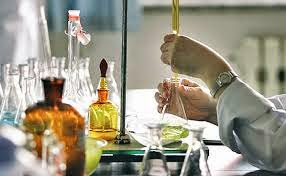
A well developed nutrition testing lab is establishing by department of Food Technology and Quality Control (DFTQC).
In current situation, the department can test only the contamination present in food products. It is unable to test the various nutritional components like protein, vitamins, carbohydrates, fat and minerals.
Purna Prasad Awasti, the DFTWC spokesperson said that, the purposed lab could test the nutritional values present in food products.
He said ‘the lab will test even the complex type of nutrition in food items’.
The department has proposed around 25-30 millions for developing the lab. At present Nepali exporters are facing a great problems in importing countries due to absence of such testing lab. They have to test such food products in Indian laboratories which cost much time and money.
Wasti clamed that the new lab will also be able to test ‘trans fat’ and ‘saturated fat’ which are supposed one of the main factor which is responsible for causing cholesterol, heart problems, obesity and other heart diseases.

At present, the DFTQC lab has ability to certify 25 different parameters including microlevel fatty acid, dietary fibres, vitamins, proteins, and minerals contain.
Inclusive education means including all types of children in education. The aim of inclusive education is to bring all children in the main stream of nation by giving equal opportunities in education according to their need and conditions. It is also known as universal education, accessible education, equitable education. It is a partial part of justice example and a fair justice policy to accept in society. Inclusive education includes all the weak children, road children, children for minorities group, children affected by HIV, AIDS and Leprosy, children in poverty etc. It is a medium to bring all castes, genders groups in different activities of a nation.
Many countries have defined the inclusive education as the development process of an education system that provides to all children to have useful education in non-discriminatory environment of their own community by upholding multicultural differences of the country. 

Characteristics of Inclusive Education

1. Inclusive education includes all children: boys and girls, those from different cultural or linguistic   backgrounds, those with special abilities or learning needs and those affected directly or indirectly by HIV/AIDS.
2. Inclusive education is gender fair and non discriminatory.
3. Inclusive education is culturally sensitive, celebrates differences and stimulates learning for all children.
4. It promotes healthy lifestyles and life skills.
5. Families, teachers and communities are involved in children’s learning in inclusive education.
6. It promotes all children from harm violence and abuse.
7. In inclusive education learning is relevant to children’s daily lives.
Online education is defined as the education in which technology is used for exchanging ideas and providing access to many people at one time and learning may be effective. Audio, video and computer networking are used for a delivery system. It is a type of distance learning education.
             Greenberg (1998) defines the distance learning education as a planned learning method, that uses the technologies to reach at a learner presented at distance and is designed to motivate the learners and also the certification of learning.
Many terms are used in describing online education.
They are: virtual education, web based education, internet based education, computer based education and many more.
It is a type of credit granting course which is delivered to the students located at remote location with the help of internet. Online courses may contain the requirement that learners and teachers meet once or regularly in lab, lectures or exam hall as long as that physical setting does not exceed more than 25% of total course time.
Historical Background
In past, online education was thought impossible, but now it becomes the reality. The internet technology has allowed us to get knowledge and learn with people of all over the world. Everyone can connect with each other all over the world with the help of internet. The online education now becomes the new field in education.
The online education has developed in the last 20 years. With the help of advance technology the online education becomes more accessible for the distant learners. The concept of distance education has been introduced in 1970s and 1980s. In the late 1970s, the satellite TV and cable are used for delivering materials of distance education course. However at present situation, the internet of high bandwidth is used to deliver the online educational courses.
With the development of newer and newer technologies, it has been expected that the computer network will play a great part of whole education.
Copyright © 2013 Education and Technology